

What is a grotesque decoration
What is a grotesque decoration
The courtyard Michelozzo projected in 1453 was upset in 1565, one century later, when Francesco I married Giovanni d'Austria. It was embellished with fifteen landscapes decorations of the Austrian Empire to honour Giovanna, Massimiliano's brother the Austrian Emperor.
The vaults of the cpurtyard were decorated with grotesques, following the old Roman style. This particular and strange representations made of monsters, vegetal and floral motifs, hybrid creatures was discovered for the first time in Rome at the end of the XV century: a man fell accidentally in a grotto completely decorated in a similar way. Anybody knew it was Nerone's house! Immediately Filippino Lippi, Domenico Ghirlandaio, Raffaello studied and reproduced a similar decoration for their works of art and soon it became the typical Renaissance representation.
This is the reason why you find grotesques in Florentine museums: in the Uffizi gallery, in Boboli garden, in Palazzo Vecchio and so on.
On the left the courtyard of Palazzo Vecchio: you can visit it with us!! On the 1st of July a guided tour inside Palazzo Vecchio! We will visit together even the tower built by Arnolfo di Cambio...Don't miss it!!


Altri articoli
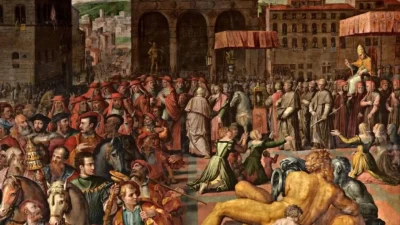
Two particolar details
Giorgio Vasari and Giovanni Stradano painted the "Arrival of the Pope In Florence" between 1555-1562.

The traditional florentine football game
At the end of the match the Florentine population answers "Viva Fiorenza" to the exhortation of the captain of the district who says; "Shout with me, Florence hurrah!".
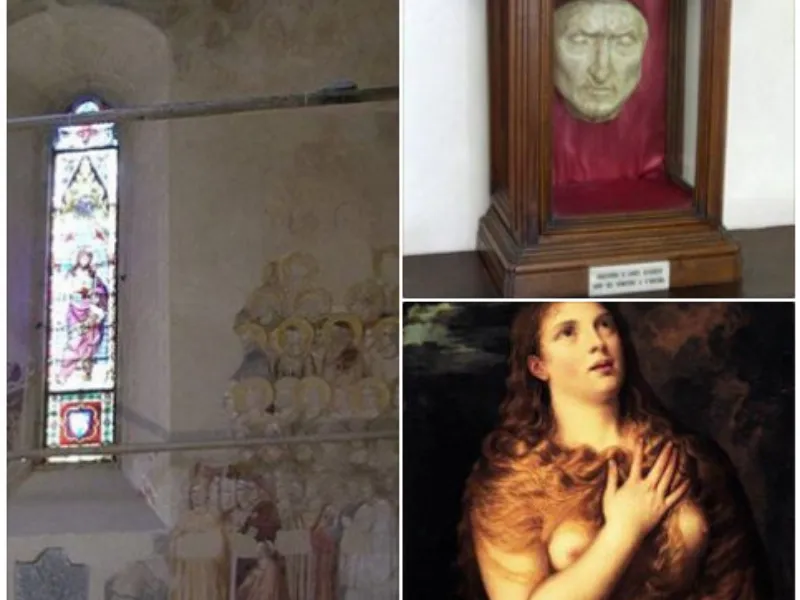
The Chapel of Mary Magdalene
In the same period Seymour Kirkup, the historian who financed works in the chapel of Mary Magdalene, was the owner of Dante's mask now preserved inside Palazzo Vecchio.
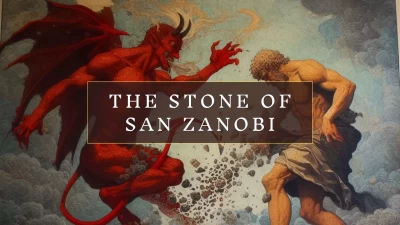
Pietramala and Its Legend
This tale symbolizes the eternal struggle between good and evil, with San Zenobio prevailing through both strength and wit.