

Wild Boar to the Uffizi Gallery
The sculpture of the Wild Boar preserved in the Uffizi Gallery in Florence is one of the most fascinating pieces in the Roman collection.Made of marble, likely Pentelic, it dates back to the 2nd–1st century BCE, a period when Roman art was heavily inspired by Hellenistic Greek models.
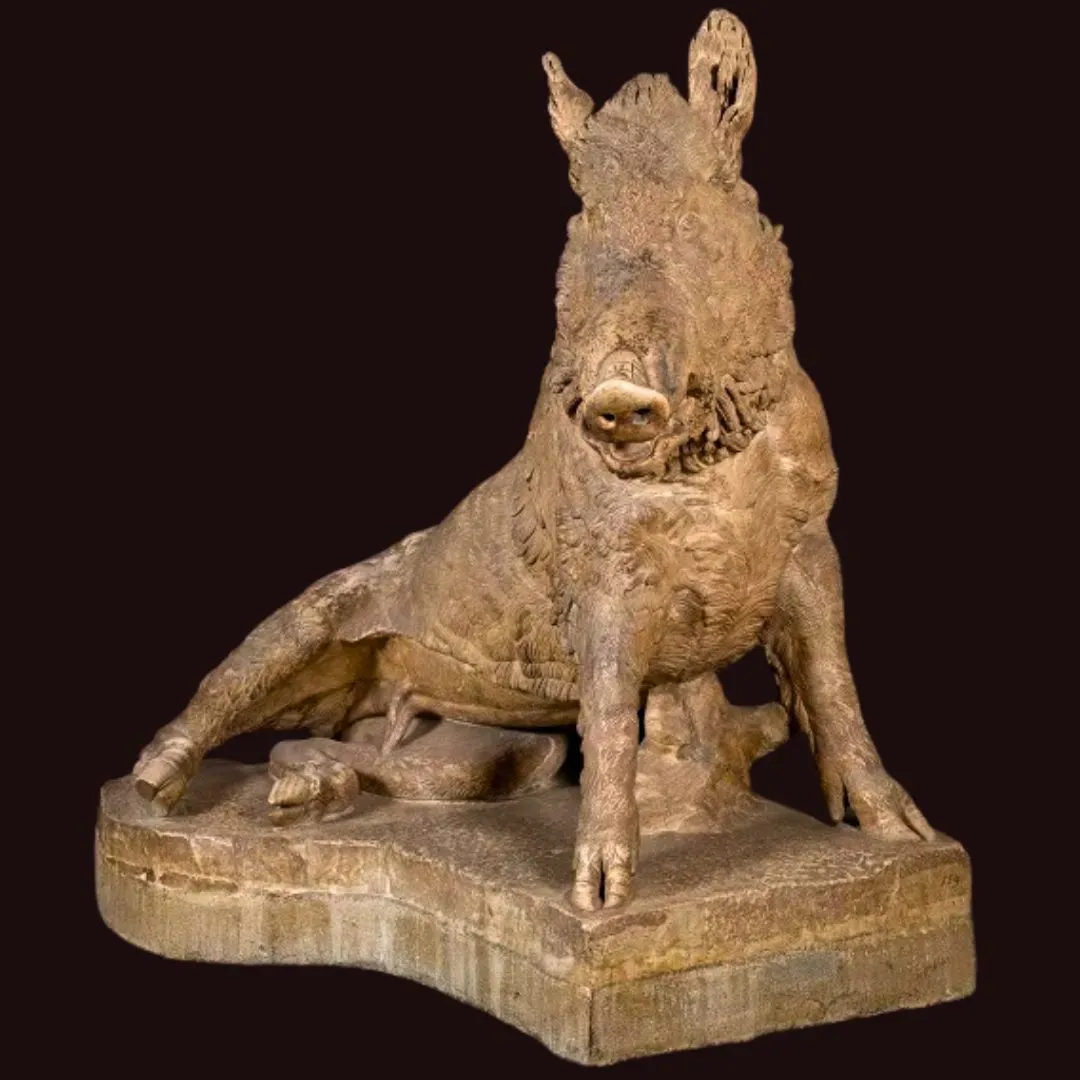 This sculpture, standing 95 cm tall, is currently housed in the Third Corridor of the Gallery, cataloged under inventory number 1914 n. 63.It was discovered in 1556 in Rome, at the foot of the Esquiline Hill, an area rich in ancient artifacts. Restored shortly after its discovery, it was transferred to Florence in 1568 as a gift from Pope Pius IV to Duke Cosimo I de’ Medici, along with two statues of Molossian Dogs. Initially placed in Palazzo Pitti, it was later moved to the Uffizi, where it is now displayed.
The work is remarkable for its extraordinary attention to anatomical detail and the realistic behavior of the animal. The boar is depicted in a moment of tension: sniffing the air, alarmed by the approaching hunter, with its front legs raised in a dynamic and natural posture.Although considered Roman, the sculpture is attributed to an artist influenced by Greek models and is believed to have originally been part of a sculptural group dedicated to the theme of hunting, a popular motif in the Hellenistic period.
The marble, possibly Pentelic, lends the piece a sheen and plasticity that enhance the sculpted details, from the bristles on its hide to the tusks, now lost. This type of marble, sourced from Greece, was frequently used for high-quality works commissioned by affluent patrons.
 The Uffizi Wild Boar gained further fame thanks to a bronze replica created in the 17th century by Pietro Tacca. This copy, known as Il Porcellino, was commissioned by Cosimo II de’ Medici and placed in the Loggia del Mercato Nuovo, where it remains an iconic attraction in Florence today.
The sculpture is not only a masterpiece of technical skill but also reflects a cultural shift during the 2nd–1st century BCE, when interest in the animal world began to emerge prominently.During this period, bestiaries and early treatises on ethology began to take shape, integrating scientific and artistic observations of animals.
Altri articoli
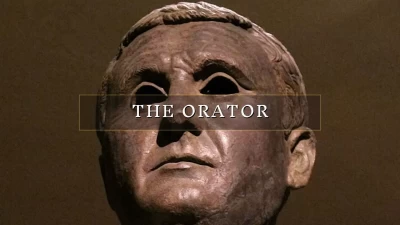
The Orator. A journey into history
The Orator, a bronze statue from Perugia, embodies power and history. A Roman figure with an Etruscan inscription, bridging two cultures.
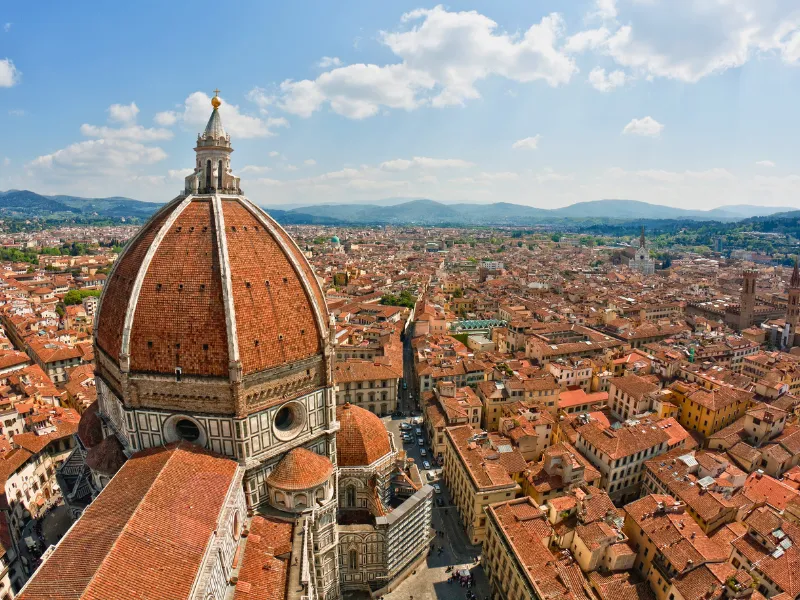
Florence Cathedral
With its majestic Renaissance architecture, proudly stands at the heart of the city.
Wild Boar to the Uffizi Gallery
The sculpture blends anatomical realism with Hellenistic symbolism, a testament to Roman fascination with the natural world.
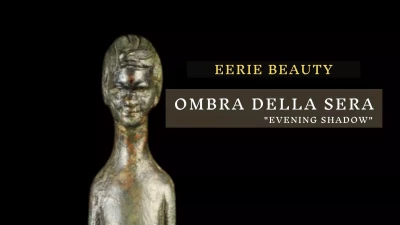
The Votive Art of Shadow of the Evening
In the Labyrinth of Time.